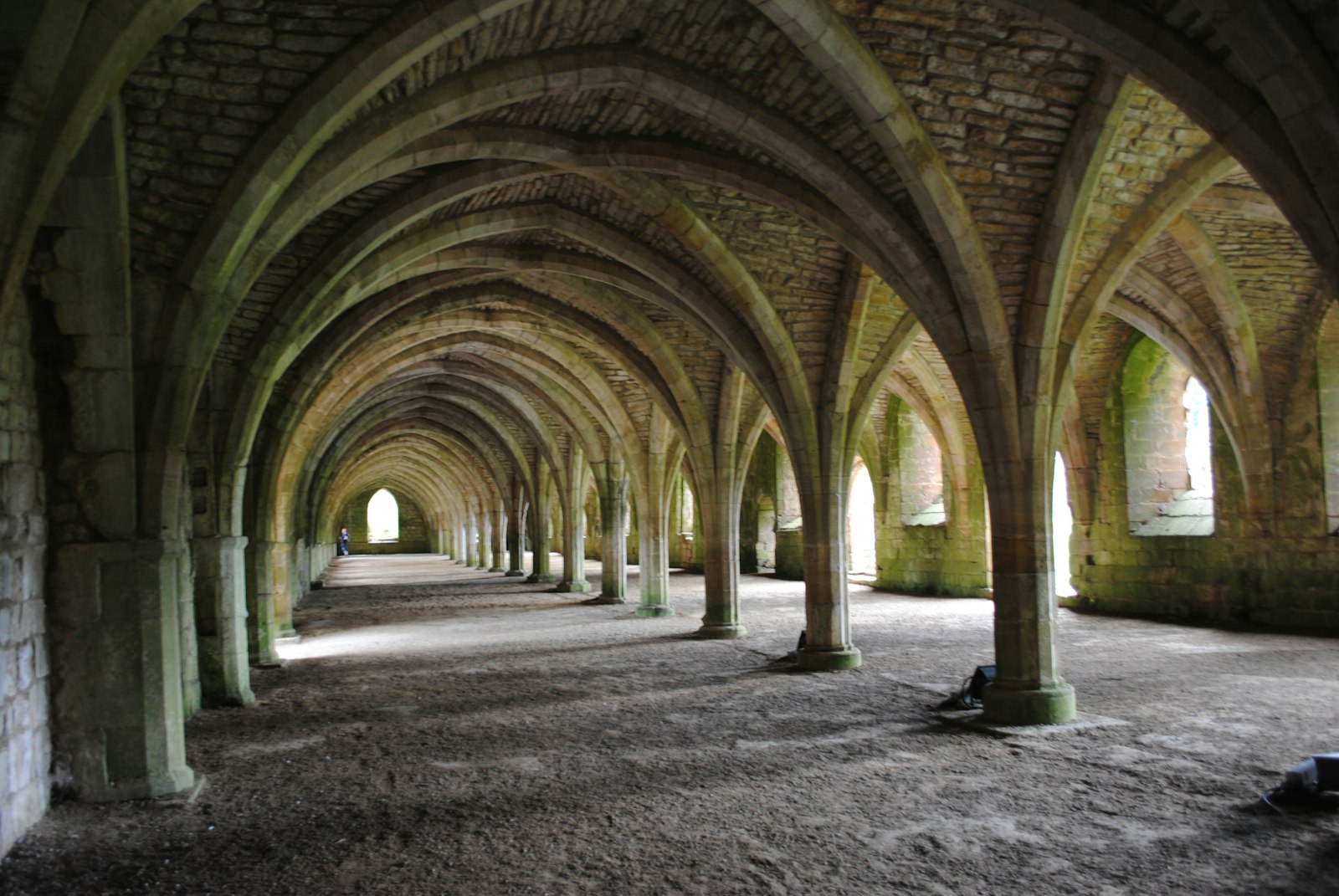
Abbeys in Yorkshire: 10 Ruins Worth the Trip (From a Local)

Abbeys in Yorkshire are one of the best reasons to get out of the cities. Before Henry VIII closed the monasteries in the 1530s, Yorkshire had some of the richest and most powerful religious houses in England. What’s left today are huge, roofless ruins in green valleys, on clifftops and by rivers. Many of them are free to wander, and most are close to places you’ll be visiting anyway.
I live in Wensleydale, and a few of these are part of my normal weekends. This guide starts with the abbeys I’ve been to myself, then covers the best of the rest. I’ll be clear about which is which.
Short on Time? My Top Three
- Fountains Abbey, for the scale of the ruins and the water garden next to it.
- Jervaulx Abbey, for a quiet, family-owned ruin and a tea room in Wensleydale.
- Whitby Abbey, for the clifftop setting that helped inspire Dracula.
Abbeys in Yorkshire at a Glance
| Abbey | Where | Best for | Entry |
|---|---|---|---|
| Fountains Abbey | Near Ripon | Huge ruins plus a Georgian water garden | Paid (National Trust) |
| Jervaulx Abbey | Wensleydale | A quiet ruin and a tea room | Honesty box |
| Easby Abbey | Richmond | A riverside walk from Richmond Castle | Free (English Heritage) |
| Whitby Abbey | Whitby | Clifftop views, Dracula | Paid (English Heritage) |
| Rievaulx Abbey | Near Helmsley | A complete-feeling ruin in a wooded valley | Paid (English Heritage) |
| Bolton Priory | Wharfedale | Riverside walks, stepping stones | Free to walk, paid parking |
| Byland Abbey | Near Coxwold | Early Gothic architecture | Free (English Heritage) |
| Mount Grace Priory | Near Northallerton | A rebuilt monk’s cell | Paid (English Heritage) |
| Kirkstall Abbey | Leeds | An abbey on a city bus route | Pay what you can |
| St Mary’s Abbey | York | A ruin in the middle of the city | Free (Museum Gardens) |
Opening times and prices last checked October 2026. Hours change in winter, so always check the abbey’s own website before you go.
The Abbeys I Know
1. Fountains Abbey and Studley Royal
If you only see one abbey in Yorkshire, make it this one. Fountains Abbey was founded in 1132 by 13 monks who left St Mary’s Abbey in York to find a simpler life, and it joined the Cistercian order a few years later. It became the largest and richest abbey in the north of England. The National Trust, which runs it now, calls the ruins the largest monastic ruins in the country.
Next to the ruins is the Studley Royal Water Garden: one of the best surviving Georgian water gardens in England, with ornamental lakes, canals, temples and cascades. John Aislabie and his son William laid it out and “borrowed” the abbey ruins into the view. There’s also a deer park with more than 300 red, sika and fallow deer. Together they became Yorkshire’s first UNESCO World Heritage Site in 1986.
I’ve been here with my wife Callie, and I’ve also run the parkrun here. We walked through the water garden and on into the Seven Bridges valley. It’s a big estate, so allow plenty of time.
- Tickets (2026): £23.10 for adults and £11.60 for children aged 5–17 with Gift Aid, or £21 and £10.50 without. A family ticket is £57.80 with Gift Aid. Under-5s go free. National Trust and English Heritage members get in free.
- Opening: the abbey and water garden open 9.30am–4.30pm. From 2 November the estate and visitor centre close on Fridays until February. You don’t need to book.
- Parking: free at the Visitor Centre and West Gate car parks. The Studley Royal car park is pay and display.
- Getting there: it’s about 12 miles north of Harrogate, off the B6265 from Ripon. Type “Fountains Abbey” into your sat nav, not the postcode, which takes you to the wrong side of the estate. By bus, the 36 runs from Leeds and Harrogate to Ripon.
- Tip: the path from the Visitor Centre down to the abbey is steep. The West Gate car park has level access.
Fountains is an easy half-day from Harrogate. It’s in my guide to day trips from Harrogate, and where to stay in Harrogate covers the best base. If you’d rather stay closer, browse hotels in Ripon.
2. Jervaulx Abbey
Jervaulx is my local abbey, and I’ve been a few times. It sits between Masham and Middleham in Wensleydale. It was one of the major Cistercian abbeys of Yorkshire, dedicated in 1156, and it’s a Grade I listed building.
What makes it different is that it’s privately owned. The Burdon family bought it in 1971 and still runs it today, and it’s described as the largest privately owned Cistercian abbey in the country. There’s no ticket office. You pay into an honesty box at the entrance, and that money, together with the family’s tea room, helps keep the abbey open.
Jervaulx is a short drive from Middleham, Leyburn and Masham, so it fits into a day in Wensleydale. See my prettiest Yorkshire Dales villages and my Yorkshire Dales itinerary for the rest of the day.
3. Easby Abbey
Easby Abbey is on the River Swale just outside Richmond, and it’s free. English Heritage calls it one of the best-preserved monasteries of the Premonstratensian “white canons”. It was founded in 1152 and closed in 1536, and the refectory, gatehouse and canons’ dormitory still stand. Inside the precinct, St Agatha’s Church is still in use and has rare 13th-century wall paintings.
I’ve been, and the best way to do it is on foot from Richmond. A riverside walk of about 1.5 miles (roughly 35 minutes) links the abbey with Richmond Castle, which is in my guide to castles in Yorkshire. If you drive, there’s a small signposted car park next to the abbey off the B6271, and visitors are asked to consider giving £1 or £2 to St Agatha’s Church.
4. Whitby Abbey
Whitby Abbey stands on the clifftop above the harbour. The first monastery here was founded in the 7th century by St Hild, and it was one of the most important religious centres in the Anglo-Saxon world. In 664 it hosted the Synod of Whitby, which settled how the date of Easter would be calculated, a method still used today. Cædmon, the first named poet in the English language, is linked to it too. The later Benedictine abbey was ruined after Henry VIII’s Reformation.
Then there’s Dracula. Bram Stoker visited Whitby and the abbey in 1890, and the town inspired his novel, published in 1897. The museum at the abbey even has a signed edition. The famous 199 steps lead up to the abbey ruins from the town, and I’ve walked up them myself.
Whitby Abbey is run by English Heritage. Booking online by midnight the day before saves you up to 15%, and tickets are valid all day. There’s much more to do in town in my guide to things to do in Whitby.
More Abbeys in Yorkshire Worth Visiting
I haven’t visited these yet, so this part is researched from each abbey’s own website and checked against a second source where needed.
5. Rievaulx Abbey
Rievaulx was founded in March 1132, the first Cistercian abbey in the north of England. Under its most famous abbot, Aelred, the community roughly doubled, and by the 1160s about 650 monks and lay brothers lived here. It closed in December 1538, when only 23 monks were left. English Heritage describes the ruins as England’s most majestic and complete, set in a wooded valley near Helmsley.
There’s a museum with monastic finds, an exhibition on how the monks changed the River Rye and its landscape, an audio tour, and a café looking over the ruins. Rievaulx Terrace is just up the hill, and a joint ticket covers both on the same day. English Heritage also suggests parking in Helmsley and walking over from Helmsley Castle. Helmsley makes a good base; see where to stay in the North York Moors or browse hotels in Helmsley.
6. Bolton Priory (Bolton Abbey)
Bolton Abbey is the name of the village and estate in Wharfedale. The ruin itself is Bolton Priory. Augustinian canons moved here in 1154 or 1155, after Lady Alice de Rumilly gave them the land. When the priory was closed in 1539, part of the church was kept as the parish church, and services are still held there today. The rest stands as a roofless ruin beside the River Wharfe.
Most people come for the walks as much as the ruins. The stepping stones are close to the Bolton Abbey car park, and the riverside paths through Strid Wood, a Site of Special Scientific Interest, were laid out in 1810. Walking is free, but you pay to park at the estate car parks. The Cavendish Pavilion, built as a tea room in the 1890s, is by the Riverside car park. If you walk up to the Strid in Strid Wood, take care and stay well back from the edge of the water.
Bolton Abbey is near Skipton, on the southern edge of the Dales. If you don’t have a car, this Herriot and Yorkshire Dales day trip from York includes a stop here.
7. Byland Abbey
English Heritage calls Byland “once one of the greatest monasteries in England”. It’s an early example of Gothic architecture, and its design inspired the rose window of York Minster. The grounds are free and open in daylight hours every day of the year. Its medieval floor tiles are usually covered from autumn to spring to protect them, so visit in summer if you want to see them.
Byland is near Coxwold, a short drive from Rievaulx, so it’s easy to see both in a day. The car park only has room for about nine cars.
8. Mount Grace Priory
Mount Grace is different from the other abbeys here. It’s a 14th-century Carthusian priory, and one of the monks’ cells has been reconstructed. Next to the ruins is an Arts and Crafts manor house with William Morris designs and 13 acres of Arts and Crafts gardens. It’s run by English Heritage and is about 6 miles north-east of Northallerton, just off the A19. Car parking charges apply to everyone, including National Trust members.
9. Kirkstall Abbey, Leeds
Kirkstall Abbey is the easiest abbey to reach without a car. It’s in Leeds, and buses 33, 34 and 757 from the city centre stop outside. Entry is “give what you can”, with a suggested donation of £5 per person. It’s open Tuesday to Sunday, 10am–4pm from October to March and until 4.30pm from April to September, and closed on Mondays. There’s a large free car park next to Abbey House Museum.
10. St Mary’s Abbey, York
If you’re in York, you don’t have to go anywhere. The ruins of St Mary’s Abbey stand in York’s Museum Gardens. Building began in 1088, and it became one of the wealthiest and most powerful Benedictine monasteries in England. Its abbot ranked alongside the Archbishop of York. The monks were pensioned off in 1540. It was also the abbey that the 13 founding monks of Fountains left in 1132. The gardens open 9am–6pm.
Add it to my York itinerary or see more things to do in York.
Tips for Visiting Abbeys in Yorkshire
- Know who runs what. Fountains is National Trust. Whitby, Rievaulx, Easby, Byland and Mount Grace are English Heritage. At Fountains, both National Trust and English Heritage members get in free.
- Book English Heritage abbeys online. Booking by midnight the day before saves up to 15%. Easby and Byland are free anyway.
- Pair abbeys up. Rievaulx and Byland are close together. Easby goes with Richmond Castle. Fountains goes with Ripon or Harrogate, and Jervaulx with Middleham and Leyburn.
- You’ll want a car for most of them. Kirkstall and St Mary’s are the exceptions. You can compare car hire on Booking.com.
- Wear proper shoes. Abbey grounds are often grass, gravel or uneven stone, and they get muddy after rain.
Want to see the coast’s abbey without driving? This Whitby and North York Moors day trip from York gives you about three hours in Whitby. For more ideas, see the best things to do in Yorkshire and my guide to Yorkshire’s castles.
Abbeys in Yorkshire FAQ
What is the most famous abbey in Yorkshire?
Fountains Abbey, near Ripon. Together with the Studley Royal Water Garden it’s a UNESCO World Heritage Site, and the National Trust calls it the largest monastic ruins in the country. Whitby Abbey is a close second, thanks to its clifftop setting and its link to Dracula.
Which abbeys in Yorkshire are free to visit?
Easby Abbey and Byland Abbey are free. St Mary’s Abbey in York is in the Museum Gardens. Jervaulx uses an honesty box, Kirkstall asks you to give what you can, and at Bolton Abbey you pay for parking rather than entry.
Is Fountains Abbey or Rievaulx Abbey better?
I’ve only been to Fountains, so I can’t compare them first-hand. Fountains gives you more for a full day, because it combines the abbey, the water garden and the deer park. Rievaulx is smaller, and English Heritage describes its ruins as England’s most majestic and complete.
Is Whitby Abbey linked to Dracula?
Yes. Bram Stoker visited Whitby and the abbey in 1890, and the town inspired Dracula, which was published in 1897. The abbey’s museum has a signed edition of the book.
Can you visit Yorkshire’s abbeys in winter?
Yes, but check the days first. Fountains Abbey closes on Fridays from 2 November until February. Byland’s grounds are open in daylight hours all year, and Kirkstall opens Tuesday to Sunday through the winter.